
Skip to content
  • Tea Trekker is Closed for ordering - informational site only
  • Subscribe

    Blog sign up

    Subscribe

    Subscribe to our blog to receive notifications of new posts by email.

  • Blog
  • Tea Trekker is Closed for ordering - informational site only
Tea TrekkerTea Trekker
  • Login
  • Menu
  • Home
  • Learn About Tea
    • Tea Education
      • What is Tea?
      • The Six Classifications of Tea
      • Steeping Tea
      • Selecting & Storing Tea
      • Healthful Benefits
      • Traditional Tea vs Commodity Tea
      • New Tea, Rested Tea & Aged Tea
      • Fresh Spring Tea
    • Places of Note
      • China Famous Tea
      • Wu Yi Shan Oolong: yan cha
      • High Mountain Gao Shan
      • Higashiyama Tea
      • Kagoshima Tea
      • Shizuoka Organic Tea Farmers Union
      • About Jun Chiyabari Garden
      • Darjeeling Tea Protected Origin Status
    • Teawares
      • Teapots
      • Teacups
      • Matcha Bowls and Whisks
      • Gaiwans
      • Teaware Accessories
  • Tea by Country & Type
    • Tea by Country
      • Ceylon
      • China
      • India
      • Japan
      • Nepal
      • Taiwan
      • Other Countries
    • Tea by Type
      • Black Tea
      • Green Tea
      • Oolong Tea
      • Pu-erh Tea
      • Hei Cha
      • White Tea
      • Yellow Tea
      • Jasmine, Scented & Smoked
      • Tea Trekker Blends
      • Organic Tea
  • About Tea Trekker
    • About Us
    • Our Books
    • Stories from our Tea Trips
    • What Others Have Said About Us
    • Our Published Articles
    • Photo Gallery
    • Tea Trekker is Now Retired
  • Our Blog
Home / Types / Pu-erh Tea
  • Linming pu-erh tuo cha
  • Jingmai Qiao Mu Sheng Pu-erh cake
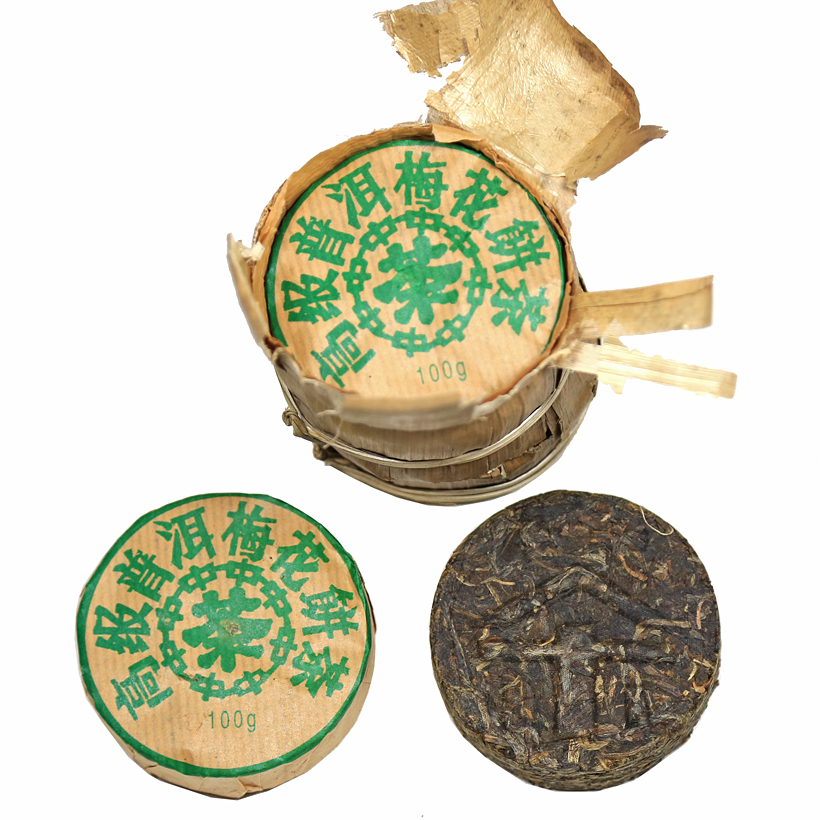
Myanmar Kokang Mei Hua 2006

Myanmar Kokang Region Sheng (un-fermented) Pu-erh Mini Beeng Cha

Sheng (un-fermented) Pu-erh Tea


Origin: Kokang Region, Shan State, Myanmar

NO LONGER FOR SALE
----------------------------
Categories: Aged & Rested Tea, Pu-erh Tea
Browse Tea
  • Black Tea
    • Ceylon Black Tea
    • China Black Tea
      • — Keemun Black Tea
      • — Lapsang Souchong Black Tea
      • — Yunnan Black Tea
      • — Other Regions Black Tea
      • — All China Black Tea
    • India Black Tea
      • — Assam Black Tea
      • — Bihar Black Tea
      • — Darjeeling Black Tea
      • — Nilgiri Black Tea
      • — Sikkim Black Tea
      • — All India Black Tea
    • Japan Black Tea
    • Nepal Black Tea
    • Taiwan Black Tea
    • All Black Tea
  • Green Tea
    • China Green Tea
    • Japan Green Tea
      • — Fukuoka Green Tea
      • — Matcha
      • — Shizuoka Green Tea
      • — Uji Green Tea
      • — All Japan Green Tea
    • Nepal Green Tea
    • All Green Tea
  • Oolong Tea
    • China Oolong Tea
      • — Fujian Semiball-rolled Oolong
      • — Fujian Strip-style yan cha Oolong
      • — Guangdong dan cong Oolong
      • — All China Oolong Tea
    • Nepal Oolong Tea
    • Taiwan Oolong Tea
    • All Oolong Tea
  • Pu-erh Tea
    • China Sheng Pu-erh
    • China Shou Pu-erh
    • All Pu-erh Tea
  • Hei Cha
  • White Tea
    • China Fujian White Tea
    • China Yunnan White Tea
    • Nepal White Tea
    • All White Tea
  • Yellow Tea
  • Jasmine, Scented & Smoked
  • Tea Trekker Blends
  • Organic Tea
  • 2021 Spring Tea
Browse Teaware
  • Teapots
  • Teacups
  • Matcha Bowls and Whisks
  • Gaiwans
  • Teaware Accessories
  • Description
  • Harvesting Season:
  • Steeping Instructions:
  • Map:

This exciting little tea cake was made in the Kokang region of the Shan State in northeast Myanmar (Burma) close to the border with the Pu-erh tea harvesting and producing regions of Yunnan Province. The raw materials in the cakes were plucked from wild-growing tea trees in an area of Kokang known for an abundance of wild growing tea trees.

We bought these cakes for the unique experience they offer tea enthusiasts – it is not often one sees this type of tea coming out of Burma, and even less often that one has a chance to actually purchase one. The same is true for old wild-grown teas made in certain parts of Laos, Thailand and Vietnam.

Of course, there are many who will argue that this is not true Pu-erh because the raw materials do not originate in Yunnan. We usually agree with such an argument, which really comes down to the root issue behind these dis-agreements and on which side of the discussion one stands. The issue is: what makes a certain tea that tea? Is the processing style the determining factor or is it unique factors that come into play in the place of origin? We side with place of origin the majority of times, but are making an exception here.

To keep this from turning into a long discussion on that topic, let me just say why we consider this tea Pu-erh.

Given the geography of the Yunnan / Myanmar border area, and that old, wild-arbor tea trees exist in both of these regions, we believe that if one were to look down on the earth from above and erase the geo-political borders between Myanmar and Yunnan one would see an expanse of forested mountains with similar terrain supporting a wide swath of old wild-growing tea trees stretching from Yunnan into Myanmar.

The tea trees in Myanmar are true Camellia sinensis species and the raw materials have much in common with the raw materials from Yunnan. The ethnic groups inhabiting this area are the same groups as live across the border in China, so they share cultures, food preferences, and of course, tea preferences. Considering that only about 40-miles separates the Myanmar wild tea trees from some of the Yunnan wild tea trees, and that the local people share a common history, we go with the feeling that, yes, this beeng cha can be called Pu-erh.

To clarify, would we consider a fermented tea to be Pu-erh if that tea was produced in say, India or Africa? No, we would not. Nor would we sell it.

The processing of this tea is very well done by traditional, village methods. The fragrance is high and floral – the cake is referred to as having mei hua ( plum flower) aroma. The body is surprisingly smooth and thick in the mouth and the taste is powerful. Expect many infusions from this Pu-erh.

Pop some of this tea on a tea snob friend in a blind-tasting and see if they can guess the origin.


Want to know more?

img-more_aged New Tea, Rested Tea & Aged Tea

Harvesting Season:

2006 Spring Pluck

Steeping Instructions:

Note on Steeping Pu-erh:


Pu-erh is traditionally ‘rinsed’ before being steeped.
This is done with a quick application of hot water that is poured over the tea in the gaiwan or teapot and then immediately discarded. The rinse water is not drunk – its purpose is to help the leaves begin to open during steeping.
Use additional appropriately-heated water for the 1st steeping and subsequent re-steepings.


Western-style steeping in a medium-large sized teapot 25-32 ounces:


Carefully scrape the tuo cha to loosen the leaves
Use 2 teaspoons (3 grams) of tea per 6 oz water
Use water that is 200°F-210°F
Rinse the tea in your teapot with a quick application of hot water
Immediately discard this liquid
Add additional hot water to start the 1st steeping
Steep for 3-4 minutes
Re-steep this leaf 1-2 additional times


Asian-style steeping in a small teapot under 10 oz or in a gaiwan:


Use 1 Tablespoon to 1.5 Tablespoons (6 grams) of tea per 6 oz water
Use water that is 200°F-210°F
Rinse the tea in your teapot with a quick application of hot water
Immediately discard this liquid
Add additional hot water to start the 1st steeping
Steep for 25 seconds
Increase the steeping time an additional 5 to 10 seconds with each re-steep
Re-steep this leaf 6+ times (or more!)

Map:

Help
  • Account Information
  • Terms & Conditions
  • Privacy Policy
  • Contact
 Learn
  • Types of Tea
  • Types of Teawares
  • Tea Education
  • Places of Note
About
  • About Tea Trekker
  • Photo Gallery
  • Facebook
  • Newsletter Sign-up
  • Blog
Recent Blog Posts
  • 16
    Oct
    Welcome to the new Tea Trekker Blog Comments Off on Welcome to the new Tea Trekker Blog
Copyright 2026 © Tea Trekker
  • Home
  • Learn About Tea
    • Tea Education
      • What is Tea?
      • The Six Classifications of Tea
      • Steeping Tea
      • Selecting & Storing Tea
      • Healthful Benefits
      • Traditional Tea vs Commodity Tea
      • New Tea, Rested Tea & Aged Tea
      • Fresh Spring Tea
    • Places of Note
      • China Famous Tea
      • Wu Yi Shan Oolong: yan cha
      • High Mountain Gao Shan
      • Higashiyama Tea
      • Kagoshima Tea
      • Shizuoka Organic Tea Farmers Union
      • About Jun Chiyabari Garden
      • Darjeeling Tea Protected Origin Status
    • Teawares
      • Teapots
      • Teacups
      • Matcha Bowls and Whisks
      • Gaiwans
      • Teaware Accessories
  • Tea by Country & Type
    • Tea by Country
      • Ceylon
      • China
      • India
      • Japan
      • Nepal
      • Taiwan
      • Other Countries
    • Tea by Type
      • Black Tea
      • Green Tea
      • Oolong Tea
      • Pu-erh Tea
      • Hei Cha
      • White Tea
      • Yellow Tea
      • Jasmine, Scented & Smoked
      • Tea Trekker Blends
      • Organic Tea
  • About Tea Trekker
    • About Us
    • Our Books
    • Stories from our Tea Trips
    • What Others Have Said About Us
    • Our Published Articles
    • Photo Gallery
    • Tea Trekker is Now Retired
  • Our Blog
  • Login
  • Subscribe
  • menu

Login

Lost your password?